| Status: | Active, open to new members |
| When: | Monthly on Tuesday mornings 10:00 am-12:00 pm 3rd Tuesday of the month At St Teresas Catholic Church, Clumber St, Warsop |
The History Group meets every third Tuesday of the month in the Roman Catholic Church meeting room at 10.00am, except when a visit is arranged.
Status: Active, open to new members.
Contact: Anyone wishing further information is invited to come along to the next group meeting, or the next monthly U3A meeting.
When: Group meetings are held every 3rd Tuesday of the month from January to November in the meeting room at St Teresa’s Church, Warsop from 10am to 12, except when an outside visit is arranged.
We are a very welcoming and active group who would love to meet new people with an interest in history. Why not come along and meet us over a cup of tea or coffee and biscuits at one of our monthly meetings.
The aims of the group are:
- To develop an interest in the different aspects of local history and the history of the wider area and to gain a deeper understanding of our local heritage.
- To encourage and support members who wish to research areas of local history which interests them and to share their findings with the whole group.
Proposed Calendar for 2025
| Date | Activity | Venue |
| 21st Jan 2025 | James Wright talk about book subject ‘Historic Building Mythbusting.’ Historic mythbusting in Nottm | St Theresa’s Church Hall 10am |
| 18th Feb 2025 | In house talk – Snippets of Southwell | St Theresa’s Church Hall 10am |
| 18thMar 2025 | Visit – Newark Governor’s House | Meet TBA |
| 15th Apr 2025 | Denis Hill – Kirkby Castle | St Theresa’s Church Hall 10am |
| 20thMay 2025 | Chris Weir -Bygone Shopping in Nottm | St Theresa’s Church Hall 10am |
| 17th Jun 2025 | Visit to Lincoln Castle and Cathedral | Meet TBA |
| 15th July 2025 | In house talk – to be confirmed | St Theresa’s Church Hall 10am |
| 19th August 2025 | Denis Hill The Life of Lord Byron the Poet | St Theresa’s Church Hall 10am |
| 16th September 2025 | Visit to Denby Pottery Museum and pottery activities | Meet TBA |
| 21st October 2025 | Chris Weir Mud, Munitions and Memorial WW1 | St Theresa’s Church Hall 10am |
| 18th November 2025 | Chris Weir – Lace, Slums and the Occasional Riot. Victorian Nottm | St Theresa’s Church Hall 10am |
| Dec 2025 | No meeting as very close to Christmas | |
History Group Report for July Newsletter
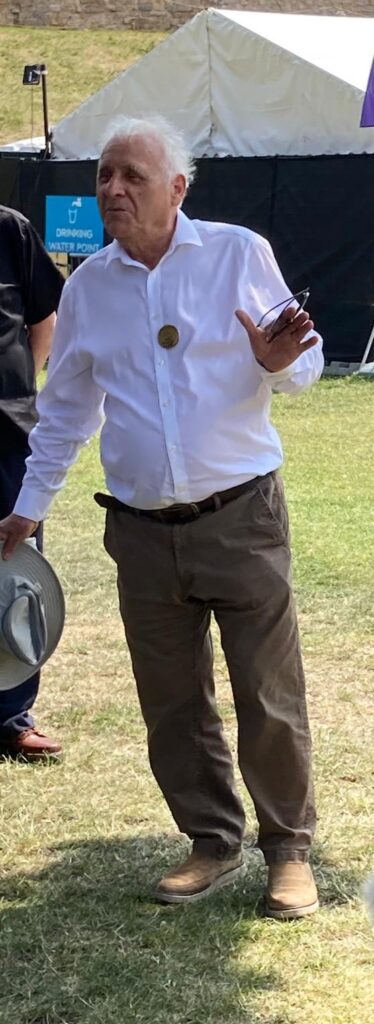
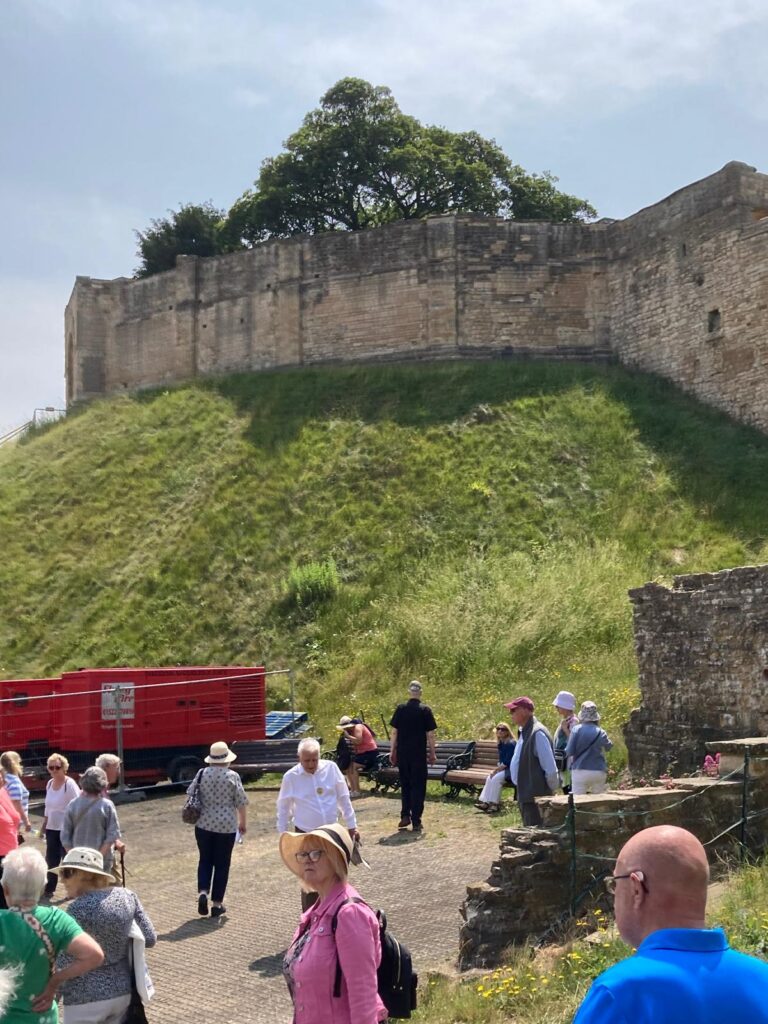
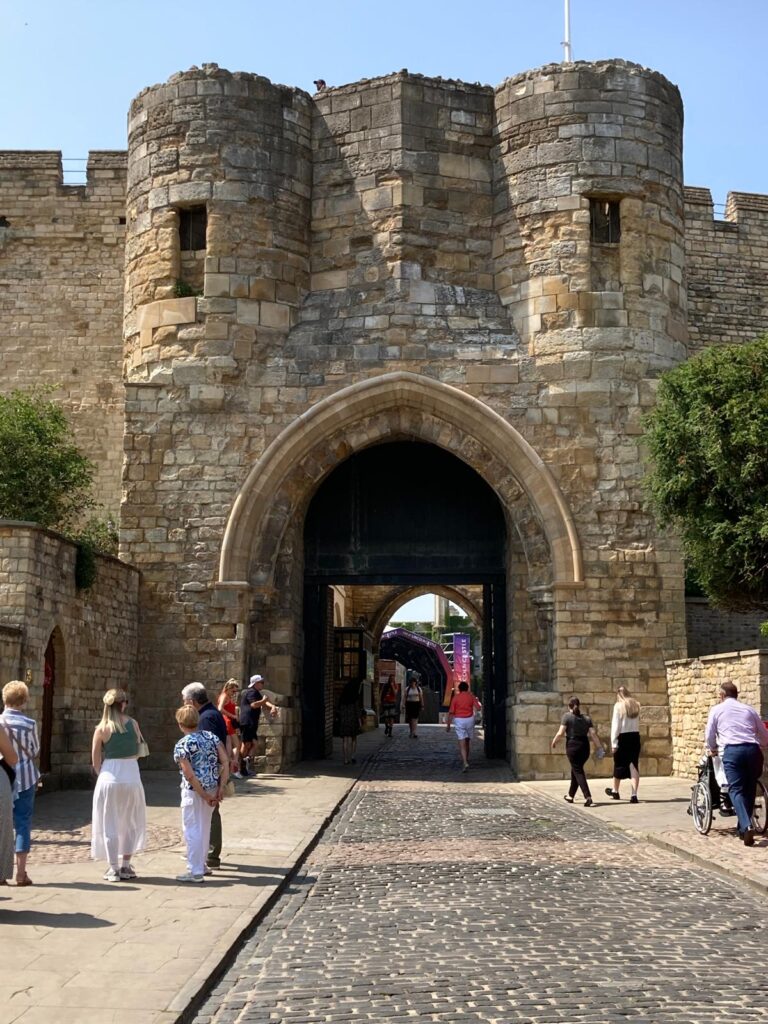
In June members of the history group visited Lincoln Castle. We were blessed with a beautiful sunny day for our trip. Our visit began with a guided tour of the castle grounds with our guide, Tom. Tom was incredibly knowledgeable and very interesting to listen to. We were treated to a fascinating whistle stop history of the last thousand years of this amazing site, from the Roman fort, which once stood on top of this hill, to the more modern day Georgian and Victorian buildings originally housing the prison and the law courts still used today and standing on the same site as medieval justicewas dispensed all those years ago.
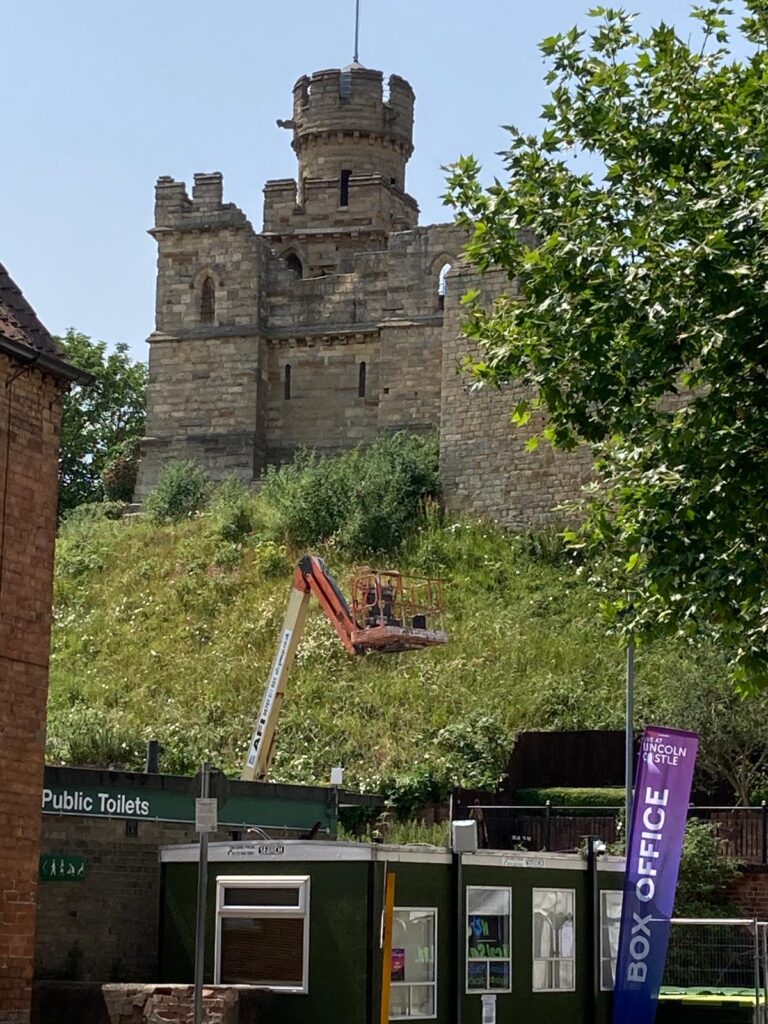
Lincoln is one of two castles in the country to boast two mottes:
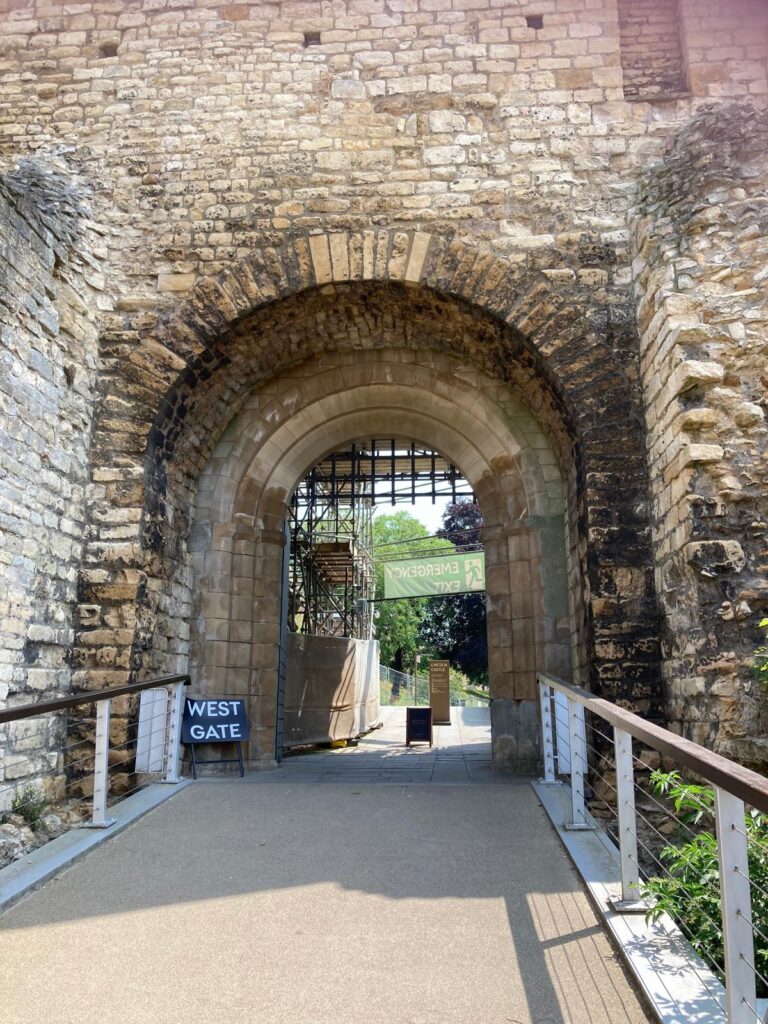
Lucy Tower, named after Lucy Bolingbrook, the Anglo-Norman heiress and Countess of Chester, and the Observation Tower.There was the amazing story of Nicola de la Haye, King John’s ‘right hand woman’, who held the castle withstanding not one, but two sieges and sent the French troops packing. Also, we were told about the recently discovered body buried by West Gate – an unsolved medieval murder! In more recent times, the local landlord of the pub next to the West Gate filled in a hole in his back yard using soil from the fortifications and discovered the original Roman West Gate, much to the delight of local archaeologists. The castle bailey had been built over the top of it, keeping it hidden for over 1800years. This did thelandlord no favours as he was sent to prison for defacing a fortification. He felt so aggrieved, he protested during his sentence by refusing to cut his hair and nails. He later returned to Lincoln a very hairy and disillusioned man!
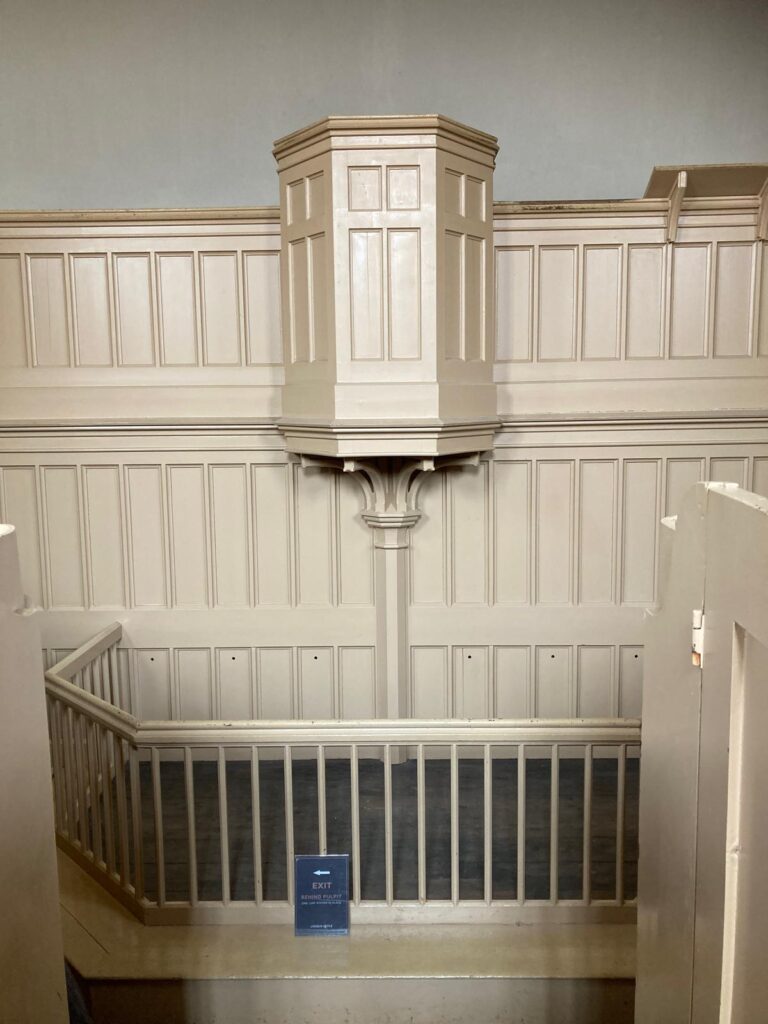
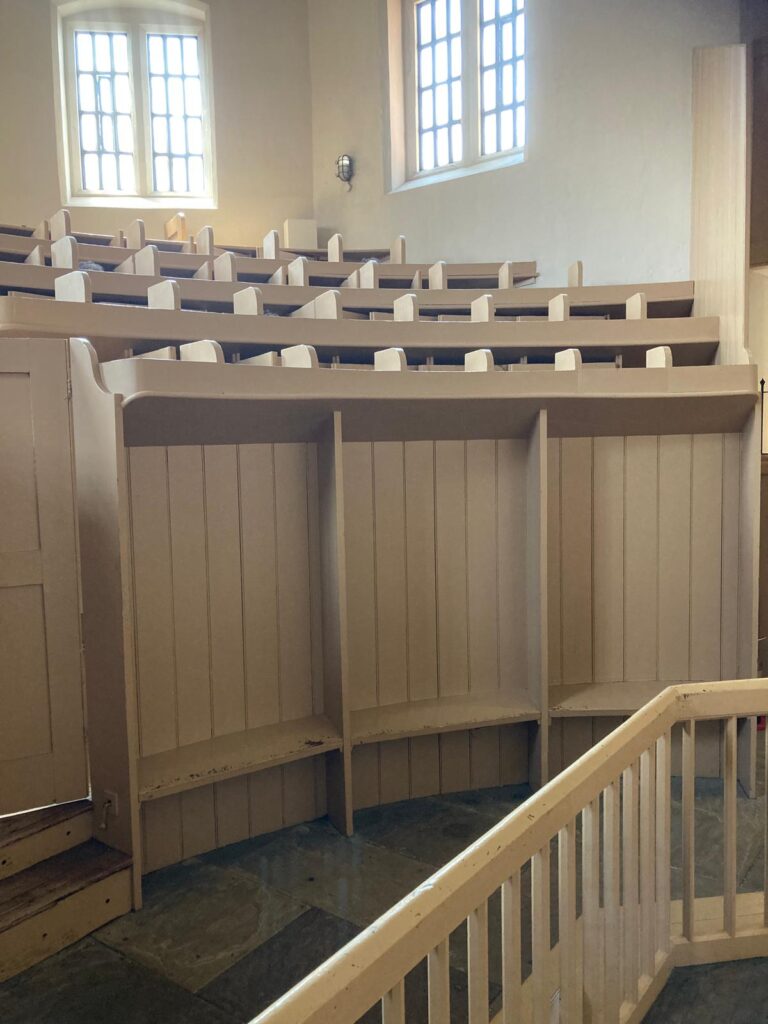
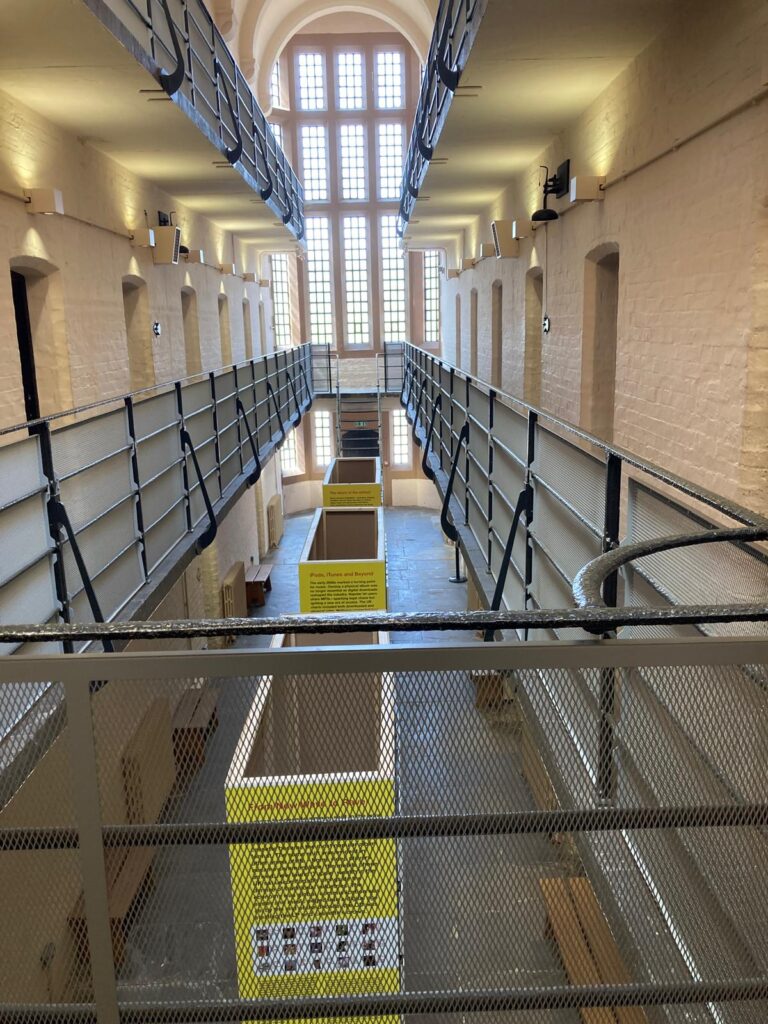
Our next meeting is on Tuesday, 15th July at 10am, at St Teresa’s Church hall when we welcome Grant Cullen, branch secretary of the Western Front Association. He will be speaking about the Quintinshill Rail Disaster. We look forward to seeing our regular members and welcoming new ones. Following lunch in the prison exercise yard we were treated to a visit to the vault where we viewed original copies of the 1215 Magna Carta and the 1217 Charter of the Forest. This was followed by a tour of the Victorian prison and chapel, built on the Pentonville Separate System model.
Warsop & District U3A History Group – April 2025 newsletter
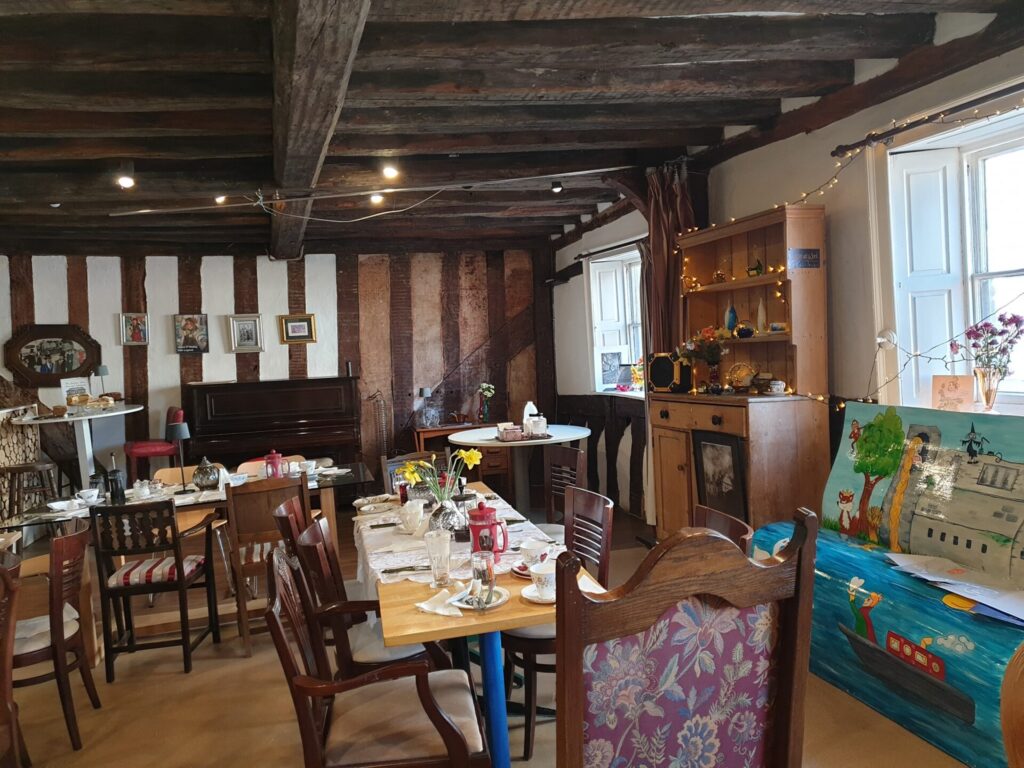
The history group visited Newark’s Governor’s House and town centre for our March meeting. Upon arrival at the Governor’s House, we enjoyed refreshments served by our waitresses, Courtney, Wren, Rosanna and B. There was a choice of vanilla, coffee, chocolate cake or Victoria sponge all made by resident chef, Fraser.
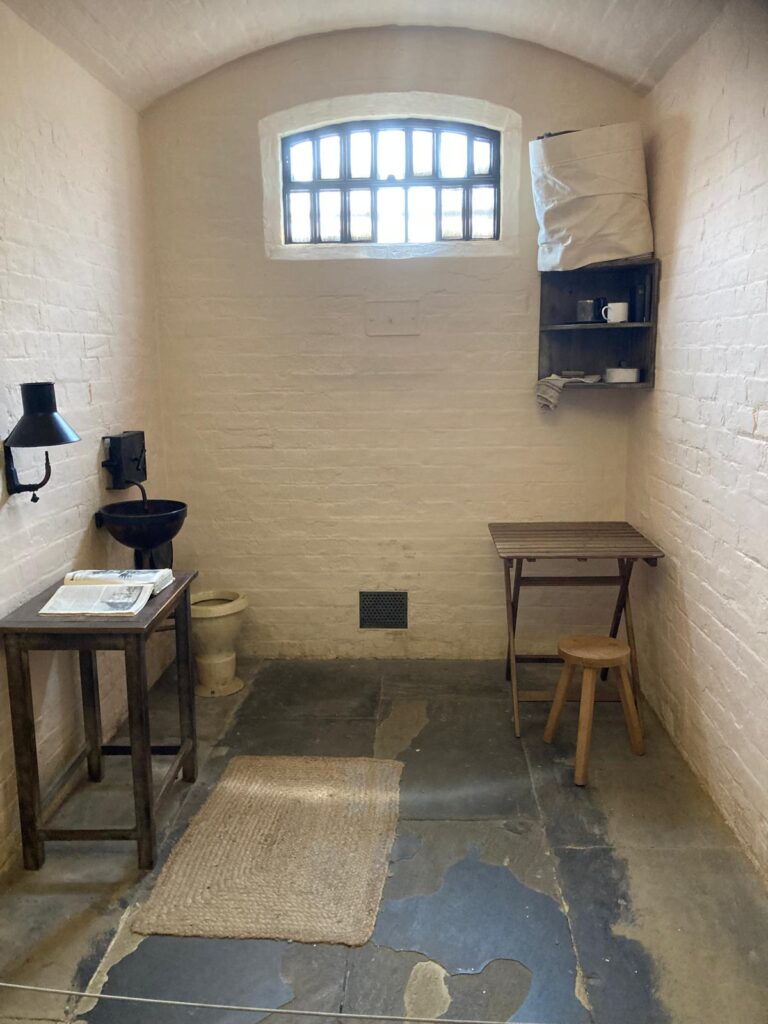
Our guide, Bridget, has made a detailed study of some of the old buildings in the town square and how there uses have changed over time. Here are some photos of the buildings Bridget spoke to us about. We began our tour at the town hall and assembly rooms built in 1776 by John Carr. Inside is the Butter Market with the police cells. Behind the building was the Shambles. The original moot hall is now a Starbucks. It was renovated by being rebuilt using the original bricks.
There are numerous coaching inns in Newark due to the town’s proximity to the Great Northern Road (Ermine Street) and A46 (Fosse Way).
Brass studs on the cobbles mark the processional way from the mayor’s residence to the church.
Burtons the tailors’ buildings are in the Art Deco style. Each building’s cornerstone bears the name of one of the Burton brothers.
The White Hart Inn, a timber framed building, dates to the fourteenth century. The oldest part is at the rear of the building where a section of timber is exposed.
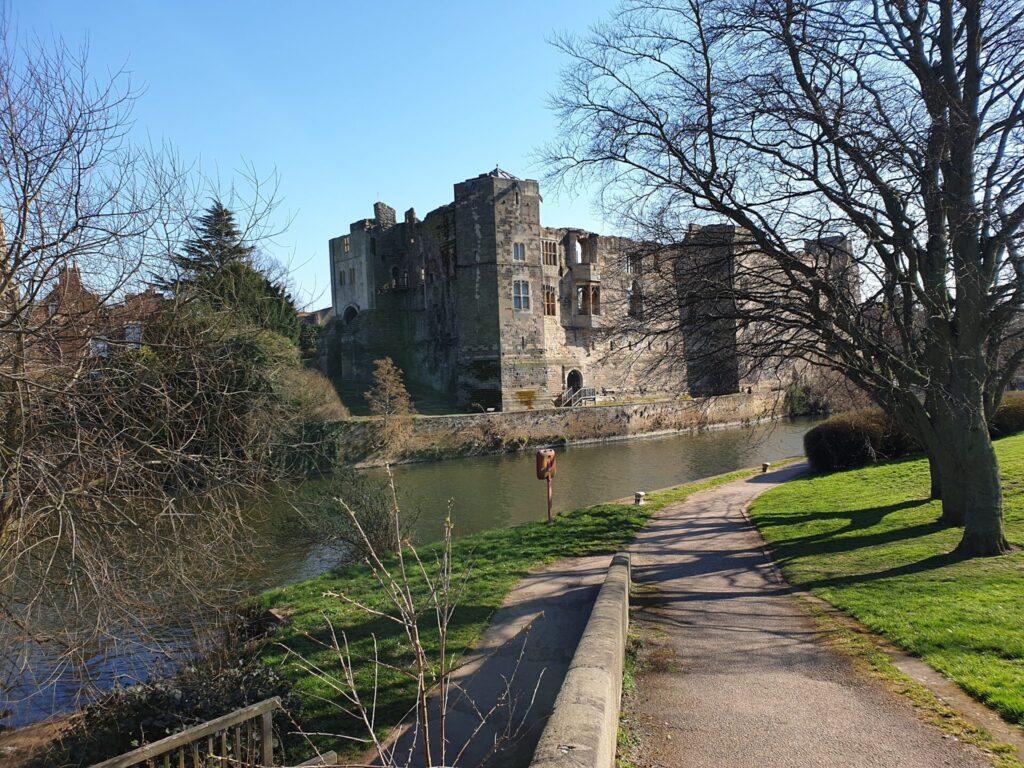
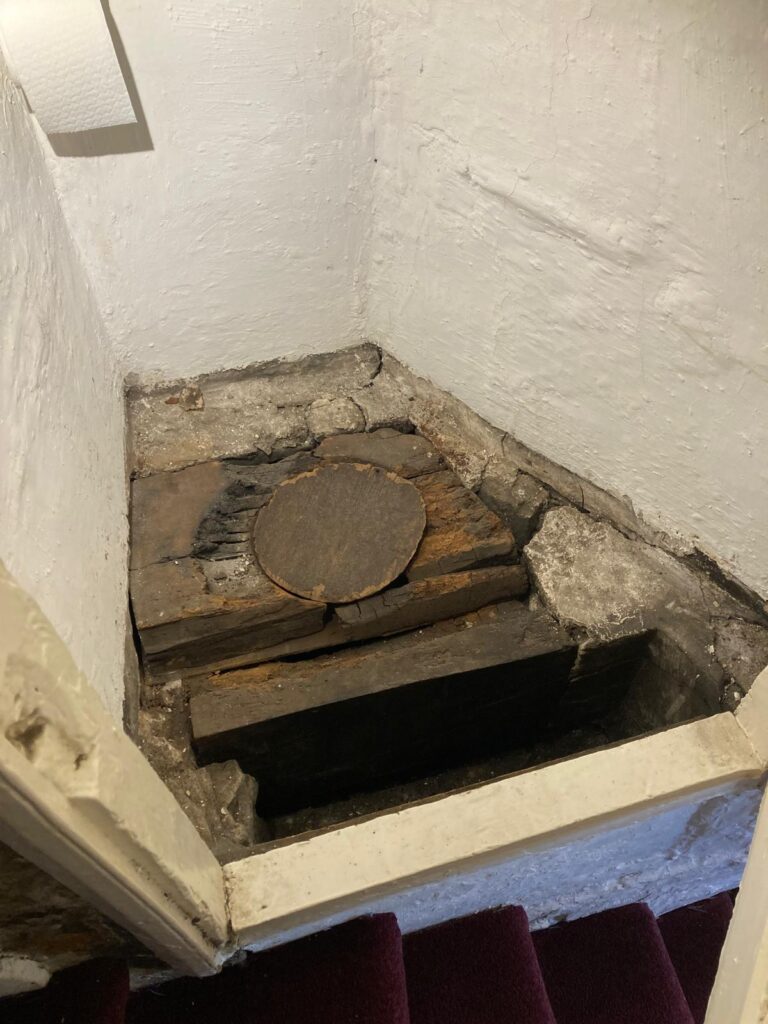
Our last stop was back at the Governors’ House. Originally built in 1474 as a merchants’ house, the property housed the Governors in charge of the Royalist forces at Newark during the English Civil War. Charles I stayed there during this conflict. It has since been a clockmakers and jewellers, residential dwelling, tailors and tobacconists. More recently it is a café. Many of the original medieval features can be seen inside the building, including the garde robe! (toilet)
Behind the buildings fronting onto the square are alleyways along which numerous small dwellings stood.
If you are interested in finding out about the history behind some of these ancient buildings in Newark, Bridget will be conducting tours from June. Details can be obtained from the Governor’s House.
Our next history meeting is on Tuesday 15th April at St Teresa’s Church Hall at 10:00 when we will be welcoming Denis Hill who will be speaking about Kirkby Castle. We hope you can join us.
Barbara & Tamar



21st Jan 2025

What could be better on a cold, damp, dark January day than a pub lunch and sitting by an ancient hearth, soaking up the atmosphere in the oldest pub in England: the Trip to Jerusalem? But how true are these claims ? Which is the oldest pub in England? What does the evidence say? What is the difference between a pub, a tavern and an inn?
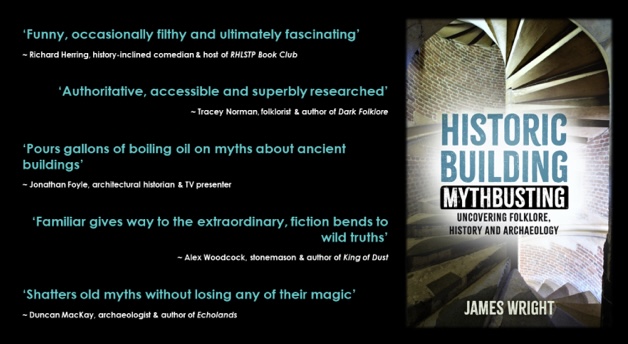
James Wright visited us for our January meeting and these were some of the questions he answered in his talk, ‘In Search of Britain’s Oldest Pubs.’ The talk was very well attended and enjoyed by history group members. James also had copies of his new book to sell, ‘Historic Building Mythbusting’.
Next month, on Tuesday 18th February 2025, we have a change to our scheduled talks. We will be welcoming our speaker, Colin, who will be talking to us about the houses of Bess of Hardwick. Colin is a volunteer at Hardwick Hall. He was due to visit us last November but unfortunately our meeting was cancelled due to the adverse weather.
We look forward to welcoming you at our February meeting. All welcome.
Barbara & Tamar

A Flavour of Past History Group Event
A History Trail of Mansfield with Denis Hill in September 2024

A stroll around some of the old parts of Mansfield town. We learned that within a 300 yards radius of Mansfield town centre there are 75 buildings which are pre-Victorian.
Many are, sadly, in a state of disrepair.


A trip to King Richard III Museum, Leicester Cathedral & Guildhall – June 2024

The statue outside the Richard III Museum and Leicester Cathedral. The museum is situated on the site of the medieval friary where Richard III was originally laid to rest after the battle of Bosworth in 1485. The site later became a car park where the writer Phillipa Langley and a team of archaeologists discovered Richard’s body in 2012. Richard III now rests a few yards away from his original grave in the cathedral.
The group enjoyed refreshments at the museum café before visiting the Guildhall with its virtual tour of Leicester’s medieval town and exhibition telling the story of Leicester's history.


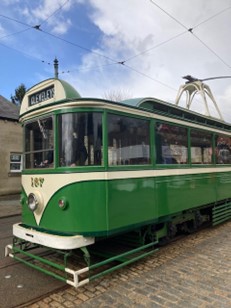
A day out at the Tram Museum Crich. 2023

The group enjoyed
- tram rides
- a visit to an old sweet shop and printers
- a wander through a period village scene,
- a walk along the sculpture trail through the woods
- indoor exhibitions telling the history of the trams.


Bakewell Old House Museum and Town Heritage Walk 2023
This amazing building was threatened with demolition, but thanks to the determination of a group of local people this beautiful Tudor building was preserved and is now the town’s museum. Following our lunch in Bakewell we enjoyed a heritage walk around the town led by our guide, Michael


The sisters who lived in this cottage (left) were accused of witchcraft and were executed.
In All Saints Church, post-1066 grave tops are on view in the church porch. Drawings on these hint at the identity of the person buried.


A trip to Cromford Mill and a trail around the village of Cromford, 2022

A Snottingham Walk, 2021

The Bell, the oldest pub in Nottingham. We enjoyed our lunch there and saw the leper’s window where 13th century travellers showed their hands to prove they did not have leprosy before being allowed in. We could view one of the two caves which were used in Saxon times to brew and store ale.

Two ‘Nottinghams’ existed side by side – the English town near St Mary’s Church and the French town near the castle. As the two areas’ populations grew, the towns met so a wall was constructed between them. The position of the wall is marked (see right) across the Old Market Square.
The oldest part of Nottingham became the Lace Market

Exploring some of the oldest finds in our area with a visit to Creswell Crags to look at pre-historic cave art - 2020


A visiting speaker from Ice Age Journeys – where we had the opportunity to see artefacts from digs at Creswell, Newark and Bradgate Park.


A visit to the town of Newark to the museum. A chance to dress up! 2020
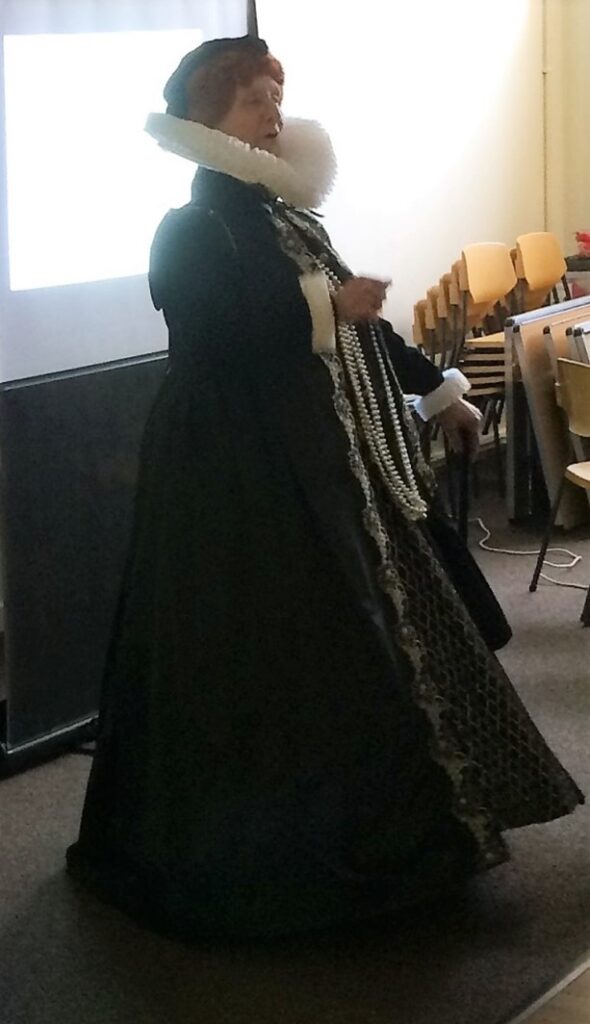
A morning with Bess of Hardwick 2019
Newark & the English Civil War – an in-house talk, 2019
Newark was the last Royalist stronghold in the English Civil War. The town, which was under siege, only surrendered when King Charles 1, who had been arrested at nearby Southwell and was being held prisoner at Kelham, ordered the town to stand down.


Padley Chapel Visit 2019

The ruins of a medieval manor with a tragic story of a recusant wealthy Elizabethan family who were persecuted, betrayed and martyred.

Eyam – the Plague Village, 2019


The Nottingham Holocaust Centre 2019
